
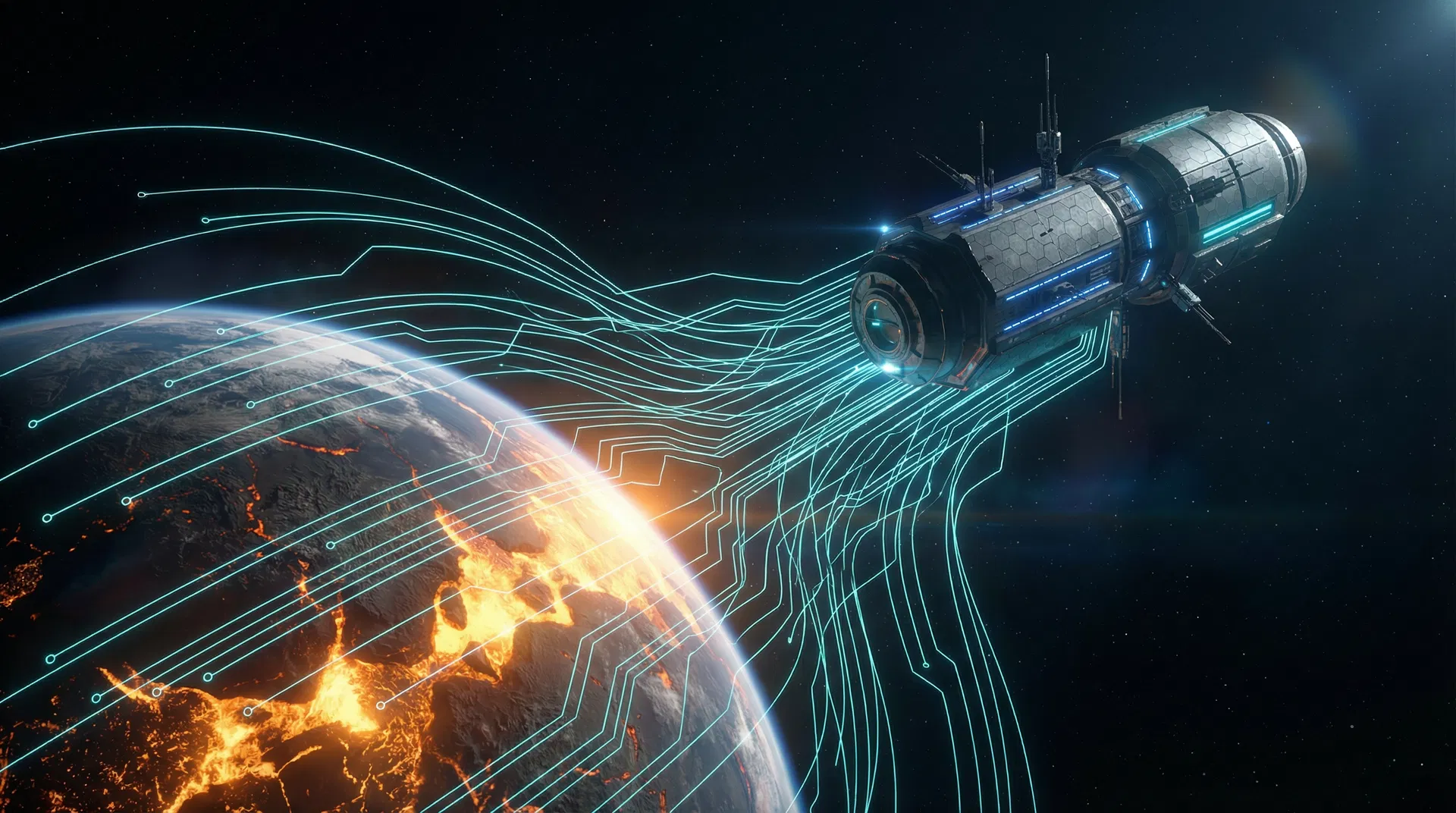
The 2028 Deadline & The Unmodeled Risk
As humanity accelerates toward the Artemis 2028 Moon landing and the 2030 Mars horizon, aerospace medicine has remained myopically focused on microgravity and ionizing radiation. However, Baird Research & Strategic Sciences (BRSS) has identified a critical, unmodeled mission-failure point: the Magnetic Vacuum.
Biological systems evolved over four billion years within Earth's geomagnetic cavity, specifically relying on the 7.83 Hz Extremely Low Frequency (ELF) electromagnetic baseline — the Schumann Resonance. Regulated deep beneath the Earth's mantle by Large Low-Shear-Velocity Provinces (LLSVPs), this invariant planetary heartbeat is not merely environmental noise; it is a fundamental biological requirement.
The Theory of Bioelectric Decoherence & Institutional Rigor
Project Halcyon, our flagship bio-defense initiative, posits that cellular homeostasis is phase-locked to this planetary metronome via Stochastic Resonance. Specifically, mammalian VGCCs utilize the 7.83 Hz signal as an exogenous synchronizing input to maintain a healthy resting membrane potential.
In the Zero-ELF environment of deep space, this grounding signal vanishes. We hypothesize that without it, cells enter a state of Bioelectric Decoherence, triggering a lethal three-phase collapse: Stochastic Dysregulation → Bioelectric Thermal Runaway → Voltage Necrosis.
BRSS does not merely theorize — we build strictly falsifiable models. Our foundational protocol investigating this mechanism is currently under peer review at Electromagnetic Biology and Medicine and is formally pre-registered on the Open Science Framework (OSF ID: 5n4kq).
The Binary Success Model: A "Win-Win" IP Engine
To test Bioelectric Decoherence, BRSS engineered the world's first continuous-perfusion Zero-ELF Nested Mu-Metal Microfluidic Bioreactor, now protected under US Patent Pending 63/933,292.
The Win-Win Chamber
The Zero-ELF Nested Mu-Metal Microfluidic Bioreactor (US Patent Pending 63/933,292) is engineered so that its commercial viability is completely decoupled from the biological outcome. Either result produces a defensible, monetizable IP position.
If biology fails without the ELF signal: BRSS holds the foundational IP for the Active Habitat Shielding (7.83 Hz signal re-injection) that will be mandated for all future deep-space transit habitats. The Artemis program becomes a captive customer.
If cells adapt to the magnetic vacuum: BRSS has engineered the world's most electromagnetically silent microfluidic incubator — achieving ≥60 dB ELF attenuation with sub-picotesla noise floors. This Pristine-Field vault becomes the gold-standard testing chamber for Biological AI (Wetware) and Quantum Processors.
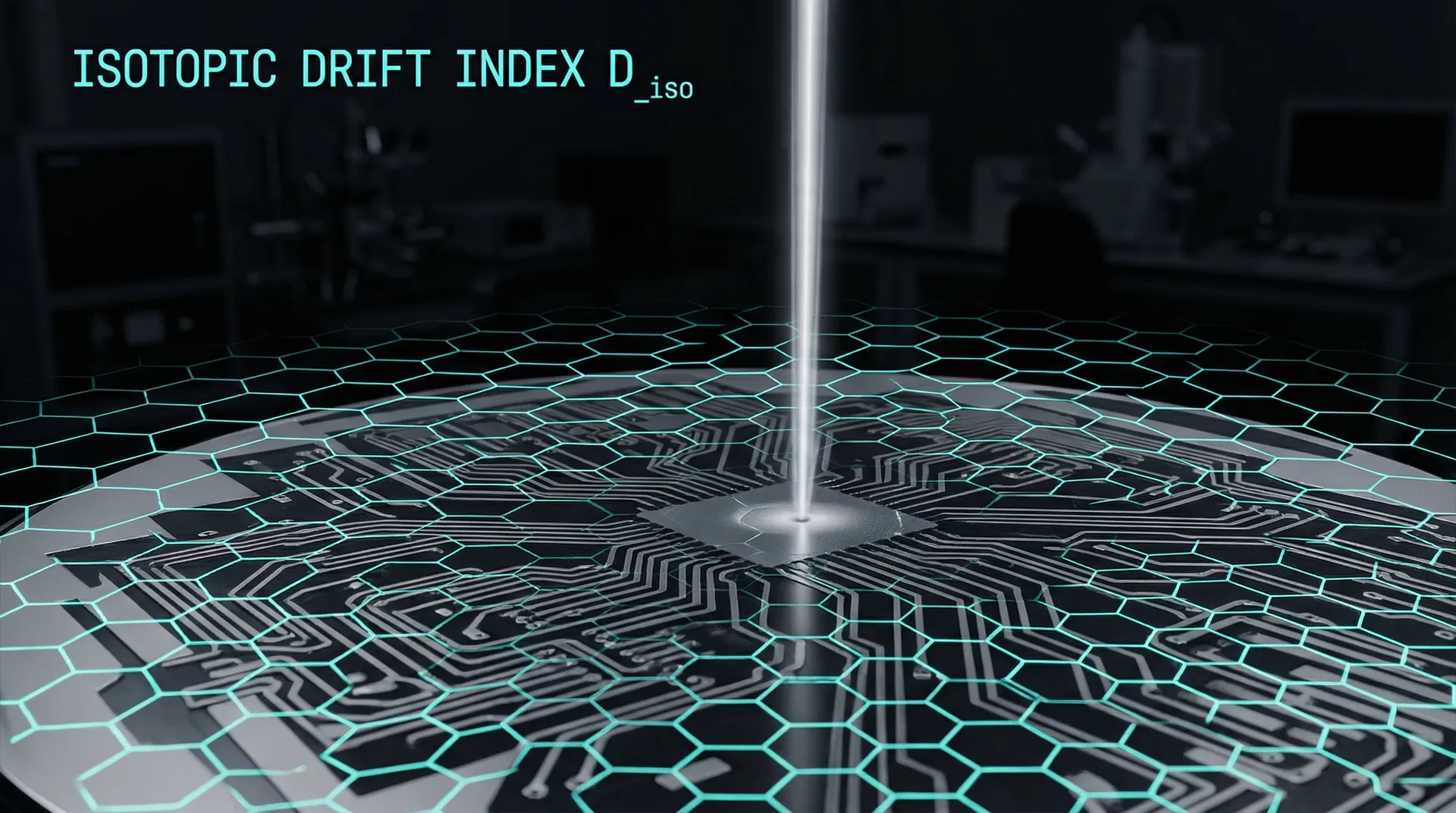
FIG. 1 — Silicon wafer under silver ion beam with D_iso hexagonal matrix overlay. Project Ironclad, GT-IEN.
Dual-Pillar Integrity & Our Georgia Tech Anchor
A deep-space mission is only as resilient as its weakest component. BRSS is executing a Straddle Strategy to solve both the hardware and biological risks of interplanetary transit simultaneously.
Hardware Risk — Supply-Chain Integrity
By manipulating the isotopic gradients of silicon components, Ironclad establishes the Isotopic Seal — a physically unclonable function designated as the D_iso . Currently executing active semiconductor physics runs and isotopic nanofabrication at the Georgia Tech IEN under an active SSA.
Biological Risk — Deep-Space Cell Viability
Leveraging our established cleanroom footprint at GT-IEN, BRSS is structuring a NASA STTR Phase I roadmap, evaluating partnership alignment with Tier-1 Planetary Exploration and Aerospace Biology labs at Georgia Tech. This institutional scaling step will create the definitive standard for deep-space biological testing. (Prospective — partnership evaluation in progress.)